
Confronting fear of loss
Marina Abramović: Balkan Erotic Epic (9th–19th of October, 2025)
CULTUREPERFORMANCEFOLKLORE
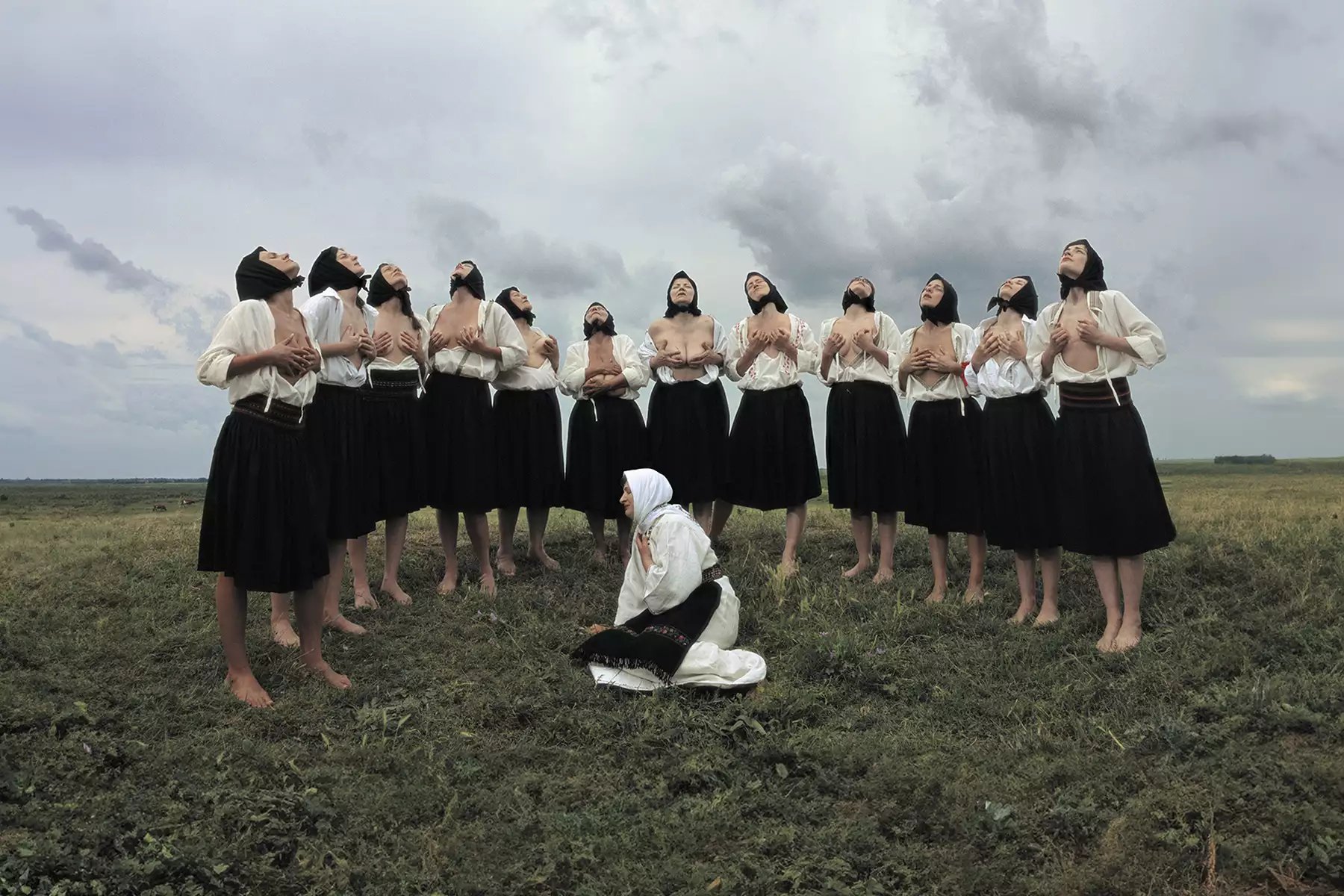
On Friday 10th I had both the privilege and the pleasure of experiencing Marina Abramović's balkan erotic epic in Aviva Studios, Manchester. In press releases the experience is often referred to as a four hour ritual, a collection of 13 endurance performances all confined within a space called 'Warehouse'.
Each of the 13 performances are based on Balkan folk beliefs and magic, and are a way for Abramović to connect with her Yugoslavian roots. Beyond this, there is also a narrative of her mother, Danica Abramović, as she navigates through the emotions evoked by these old ways and the timeless strife they represent – a helpful vehicle for you, the audience, should you choose to follow her.
To get sidetracked from the get-go, I want to touch on an aspect of what makes an epic – a seemingly obvious one, that being its scale. Beyond just the sheer scale of the production itself, an epic cannot be consumed whole, and you will not experience everything balkan erotic epic has to offer in one night. Each of the 13 performances have their own narrative, and you will never experience them all, so you must contend with the inherent incompleteness of your experience.
All this to say, that there are innumerable angles from which one can approach these performances, and I have chosen one to make my own – that of the permeating theme of loss.
In defiance against death
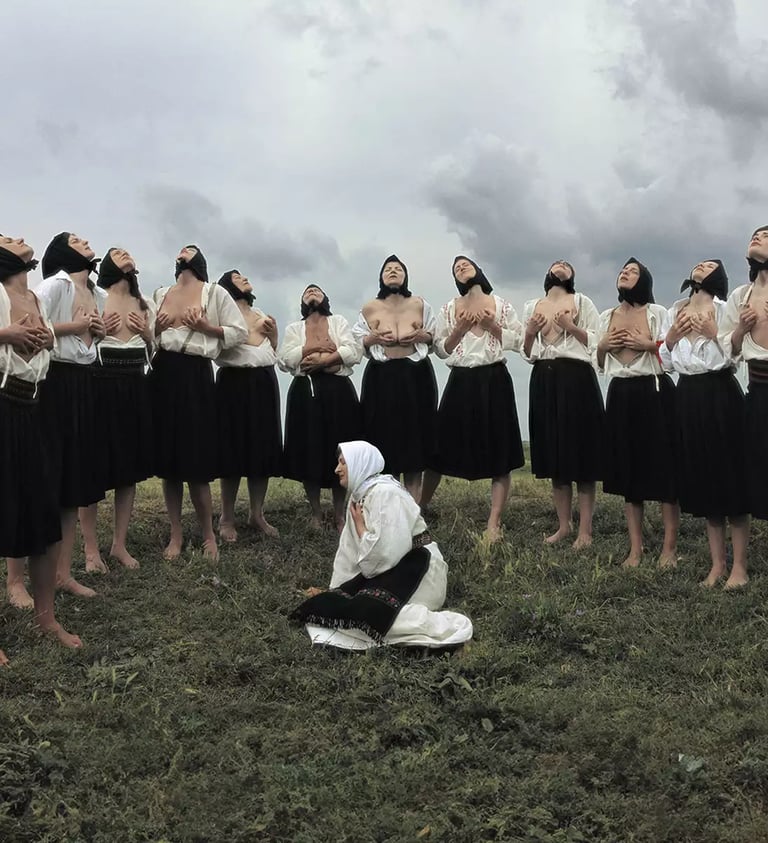
"... watch fertility rite, a fevered ritual where bodies writhe against the ground in a desperate call for fertility. witness massaging the breast where women gesticulate over graves to awaken the earth. in scaring the gods, women bare themselves to the sky to banish storms..."
— performance description
Abramović describes balkan erotic epic as the most ambitious work of her career, exploring desperation, pain, hope, suffering and mortality through the sexuality and physicality of Balkan rituals. While the inherent eroticism of the rituals described above feels obvious, I find in Abramović's words the meat on the bones of her work, the why of these rituals – resistance against death and loss. Infertile ground precedes starvation, the living refuse to let go of their precious dead, and the Gods themselves must be defied to protect our crops – all acts of hope against all hope, desperate acts in an attempt to keep death at bay, to resist or reject it. I found that these themes permeate all of the 13 performances, but I wish to focus on one in particular.
Stop the rain
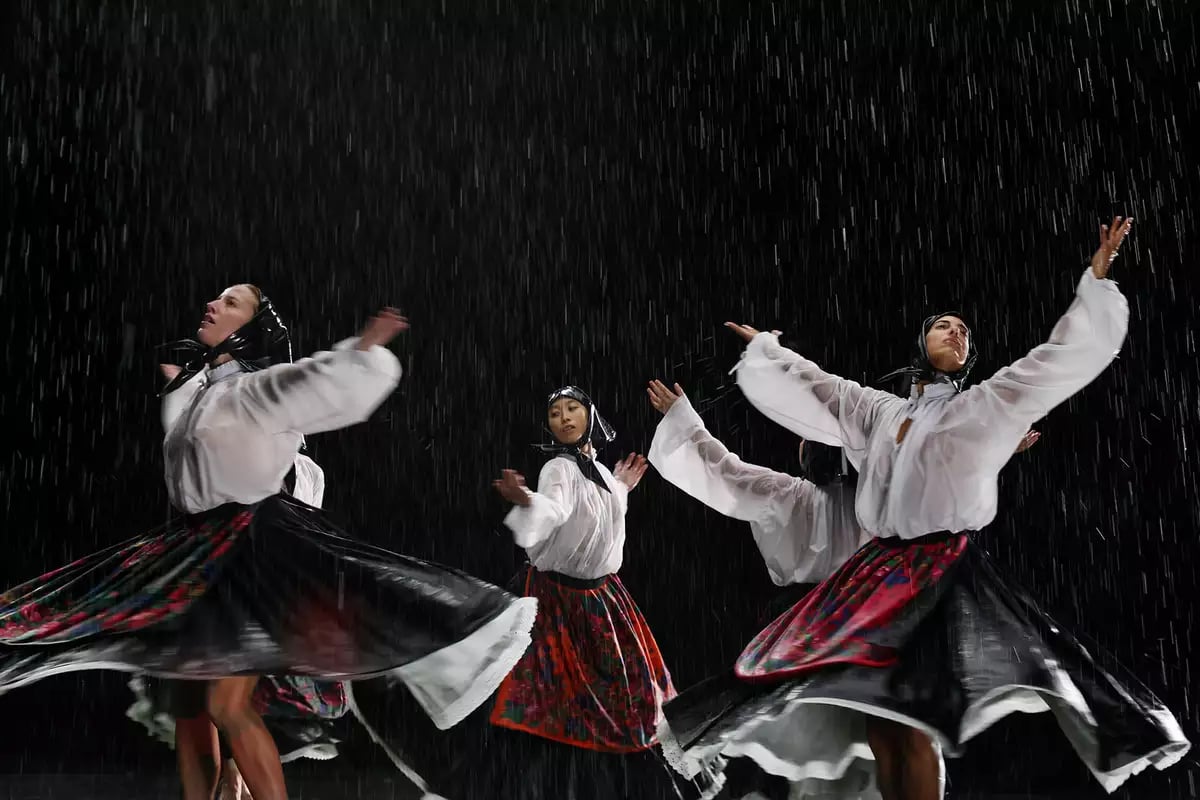
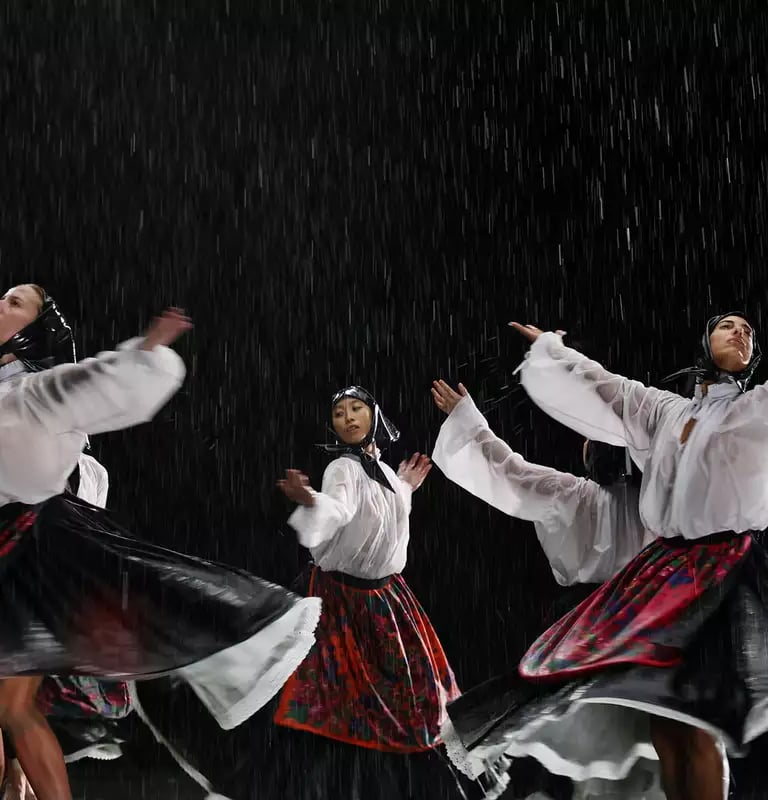
scaring the gods to stop the rain, full name of the performance, represents the tremendous effort of women to protect their village from the torrential rain, threatening to drown their crops and doom their people to famine. They do so by baring themselves to the earth and sky, screaming and roaring, "transforming the body into a divine weapon" by Abramović's words. A similar ritual exists in the Finnish folk magic as well, in which women would bare themselves to bears and wolves, to scare them away with their "maw" of a kind.
The stakes in this performance feel tangible, as it is doubtlessly exhausting to do this over and over again, for four hours a day across two weeks – and likewise, tangible is also the relief when those four hours are up, and they may finally stop. Having sat through all of that yourself as well as an audience member, you share in their reprieve.
If we step inside the narrative for a moment, how overwhelming must it have been, to dance this mad dance in the fields for an indeterminable amount of time, with no promise of the rain ever ending and no promise of survival? I have heard it said that hope is not a noble state of mind but a mere instinct, a universal animal insistence on survival, and so the women must defy the Gods – there is no other viable course of action.
Re-enchantment through performance
What balkan erotic epic evoked in me was a sense of re-enchantment, an immersion into ritualised storytelling in a constant cycle of hope and despair. One does not need to know or understand the rituals/performances to be drawn into the momentary alternative reality they create – to exist as you are in a constructed experience, all the while allowing one's senses and thoughts to be open to something more, perhaps a "super-naturality" of the moment, as if something beyond the material reality of your situation were occurring. It is a powerful experience, a testament to which this blog post ought to be.
If you are Manchester-located, you will have until the 19th to catch this show, and globally you will be able to catch it later in Barcelona, Berlin, New York and Hong Kong. I look forward to reading more analysis of this performance as it reaches wider audiences.
* Photo credit to Aviva Studios