Autumn 2025 favourites
Personal favourites in media from September, October and November 2025
FILMLITERATURE
I have always wanted to do these kinds of look–backs on my media habits, to dwell more on the things I've read and seen that have left an impact on me – the sort of works that have stirred something in me as a creative spectator. Consider these a recommendation as well as a personal dissection!
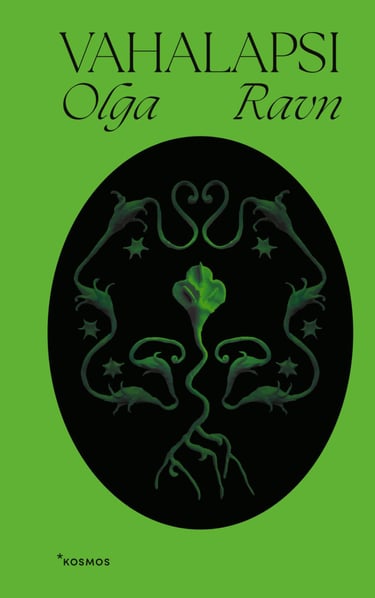
The Wax Child (2023) by Olga Ravn
While the tragedies of witch trials are familiar, it is not to say that every angle has yet been exhausted. The Wax Child is from the point of view of a child shaped out of beeswax, its malleable body sometimes sharp and pointy by fingernail clippings. The novel is loosely based on the story of Christenze Kruckow, the only Danish noblewoman sentenced to death on accusations of witchcraft, but its focus lies elsewhere.
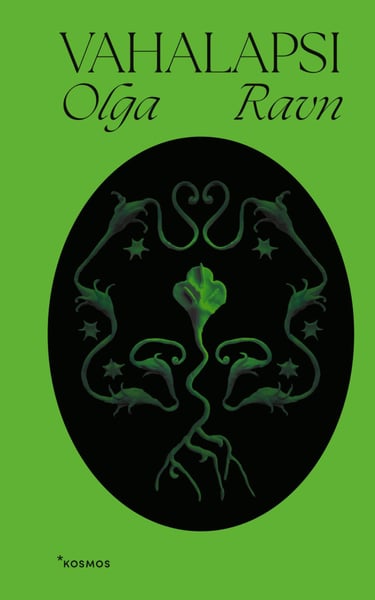
{ ... i could not answer, could not even blink, [ ... ] and because i could see nothing but the lid, i decided to perceive my surroundings with my back, and with my back i heard and saw the limfjord, the quaysides and the market place. i saw the mound with its gallows dripping with rain.
i saw a servant girl drown her newborn in secret. i saw the sand of the execution place absorb the blood from the beheading. i saw a breastbone at the bottom of a tub of ale. }
The perspective of an inanimate object is an interesting one, and plays into the novel's theme of womanhood under patriarchy: no power to act, only to hear, to see, to remember. The women of this story truly are, by all accounts, witches – but the only "harm" in it is that it is hidden, unseen – and therefore dangerous, conspiratorial – and must be wiped out. Women cannot be trusted to gather among themselves, outside of the watchful eye and the corrective hand of man. Once the trials begin, nobody seems willing to take responsibility of the inevitable final outcome of the trial, despite knowing where the end of the road leads – an inverse of the power to act, but lacking the will to do so. A very timely consideration of the role of the bystander, the evil of inaction.
Donkey Skin (1970) dir. Jacques Demy
Following the themes of feminist fantasy, Donkey Skin is a long-time favorite of mine. I'm yet to find another film to look so much like a fairytale, with horses painted blue, precious gems like those of glass I used to play with as a child, and a classic fairy-tale narrative leading up to the "happily ever after". Donkey Skin is a playful yet sincere film, with a little twinkle in its eye all the way through.
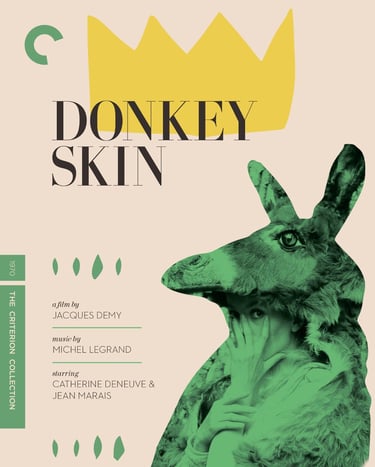
{ the blue king, reciting a poem: the ring is slipped on the finger after a kiss seals our vows. what our lips murmured is in the ring on the finger. weave roses through your hair. i love you, my daughter, and wish to marry you.
the princess: poetry deranges you, father. i beg you to stop. }
For those who are familiar with Donkey Skin and wish for something similarly fantastical, I would warmly recommend the Finnish 'The Snow Queen' 1986 adaptation directed by Päivi Hartzell.
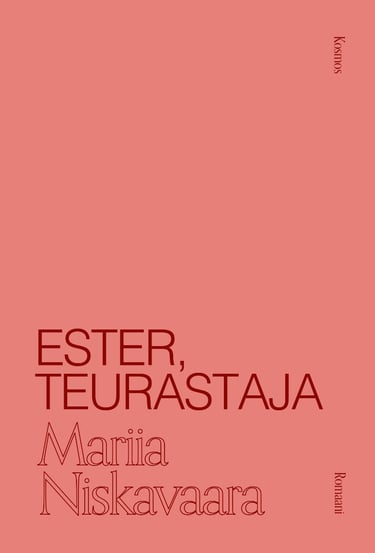
Ester, teurastaja (2025) by Mariia Niskavaara
This book is yet to be translated from Finnish, but I trust that eventually it will. This is an incredibly strong debut novel from Niskavaara, and I look forward to her future work. Ester, teurastaja (eng. Ester the Butcher) is a joyfully grotesque fable about flesh, of pigs in slaughter and their departing broth-scented souls, meat both raw and processed almost flowing down the streets of Ester's abattoir hometown, its time and place unspecified by contradictory signals.
{ here is ester, going to work. ester, the butcher. ester has shiny lips and strong thighs, she walks her way through the town all the way to the abattoir, where she dons her white coat and earmuffs, and the whole day she butchers away. it is the only job she has ever had, and the only job she would ever wish to have. }
Ester is hardly a one-note character, for despite doing what she loves and never having held any doubts about who she is and what she does, she does want to be a mother. Unfortunately her husband, The Seminologist, seems only capable of impregnating the sows of the abattoir, and not her. The novel seems to almost come apart at its seams the nearer the back cover draws, as both you and Ester are lost in her desperation of attaining motherhood, and the twisted way she ultimately fulfils this wish. Perhaps bordering on disturbing, the book always retains its humanistic touch.
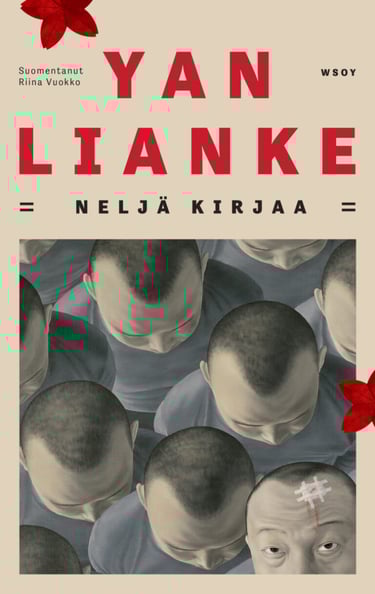
The Four Books (2013) by Yan Lianke
Inexplicably, I have read exactly two Chinese books this year, and both of them featured scenes of cannibalism (the other book was 'The Republic of Wine' published in 1992 by Mo Yan). However, the road to the Great Chinese Famine is a long one, and thankfully, we only need to make Great Leap Forward to reach it.
{ around midday, the child arrived. people were scattered over the land like so many stars. [ ... ] throughout the land there was the smell of centuries-old soil. the people were exhausted, so they squatted down to rest. when everyone saw the child arrive, they again started working frantically. one person appeared not to notice, so the child walked over to him and, knowing that this was an author who had written many books, said, “your works are pure dog shit.” }
The Four Books is told from the perspective of a character simply referred to as The Author, and the novel consists of his recollections of the events of the re-education camp he and the other intelligentsia of China had been sent to, to become proper citizens again through menial labour.
The two pertaining themes of the novel, in my eyes, are both the meaninglessness and "more real than the real" nature of symbols. The labor quotas run so high that they cannot ever possibly be reached, but nobody really cares whether they truly are, for the promise of greatness held in the high quota in and of itself is greatness. This absurdist line of thought is both familiar and ridiculous, and you cannot even laugh because people suffer, die and starve. The number goes up, because the number going up is all that matters.
* * *
The "Winter Edition" of my personal picks will be released sometime in February 2026.
© FELL 2025 – 2026
The clock – evil, terrifying, inscrutable god / Whose menacing finger warns us, crying: / "REMEMBER!"
(Les Fleurs du mal, Charles Baudelaire, 1857)